
Led by the country's largest car maker Maruti Suzuki, Ford India, General Motors and Toyota Kirloskar logged overall growth in sales volumes.

As Australia fell to two straight losses against hosts India in the Border-Gavaskar Trophy, Geoff Lawson held skipper Pat Cummins accountable.

The revised prices will be effective from October 1, 2012.
Extension of 2% interest subvention for textile sector will reduce the interest burden on the P&L of textile companies this fiscal.

A confident Mother Dairy has set an ambitious target now: sales of mishti doi should hit 15 per cent of sales by the end of this financial year and 30 per cent by the next three to four years.

India's services sector activity continued to expand in September, supported by favourable underlying demand amid the easing of COVID-19 restrictions, but lost some momentum from August's 18-month high level, a monthly survey said on Tuesday. The seasonally adjusted India Services Business Activity Index fell from 56.7 in August to 55.2 in September, but remained well above its long-run average. "Despite easing from August, the rate of expansion was marked and the second-fastest since February 2020," the survey said.

If excise duties are revised upwards, it will affect the FMCG sector, which is witnessing sequential rise in its input costs.

The national carrier, which is already struggling with its fuel payments, spends Rs 6,000-7,000 crore annually on fuel. A 10 per cent hike in crude price would mean over Rs 50-58 crore of extra costs for the airline.
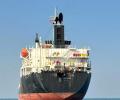
The world needs to wake up to this new dimension of war at sea and be prepared to face the 'unknown enemy' who have the advantage of attacking at their choice of location and time, cautions Commodore Venugopal Menon (retd).
Toyota Kirloskar Motor is considering 1 to 2 per cent increase in prices of all its products - Toyota Innova, Corolla, Camry and Prado.
Top commercial vehicle maker Tata Motors has raised the prices of its medium and heavy vehicles by 2-2.5 per cent on account of increase in input costs.

The Colgate-Palmolive (India) stock gained 2.3 per cent in trade on Friday, and ended at Rs 2,079 per share. This was on the back of a robust operating performance in the July-September quarter of 2023-24 (Q2FY24) and expectations of gradual sales recovery going ahead. While the stock is up 44 per cent from its lows in January this year, further gains will depend on its ability to sustain higher growth rates.

Overseas investors have pulled out a net Rs 1,14,855.97 crore from the Indian markets in the current year so far, amid heightened geopolitical tensions and inflation concerns. Foreign portfolio investors have sold domestic equities worth Rs 48,261.65 crore so far this month, taking the year-to-date tally this year to a massive Rs 114,855.97 crore, according to depositories data. The exodus of foreign investors was largely owing to inflationary pressures and deepening global macroeconomic conditions following the Russia-Ukraine war, experts said.

"The prices of all Mercedes-Benz models will be revised upwards effective May 1, 2011 for the Indian market," Mercedes-Benz India Managing Director and CEO Peter Honegg said in a statement.

Maruti Suzuki India, country's largest car maker, on Wednesday said it will increase the prices of its entire range of models by up to Rs 10,000 from October first week, mainly due to depreciation of rupee.

The company said the price rise is effective from April 4 across the country.

Consumer durable firms, including Haier, Whirlpool, Panasonic, Godrej Appliances and Daikin, are increasing prices of their products by up to 5 per cent following the withdrawal of excise duty sops, coupled with high input costs.

The models of the company include flagship sedan City, hatchback Jazz, premium sedan Civic and sports utility vehicle CR-V.

'Markets could face uncertainty in the short to medium term.' 'It would be prudent to invest in alternative asset classes, especially debt, for about a year.' 'Bank fixed deposits are offering rates as high as 9 per cent per annum and these can be used as a great hedging tool until equity markets stabilise.'
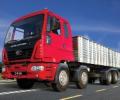
Hinduja Group flagship company Ashok Leyland on Tuesday announced a price hike of its entire range of commercial vehicles by up to Rs 50,000 on account of rising input costs with immediate effect.

Even as raw material prices start cooling off from their peaks, fast-moving consumer goods (FMCG) companies' margins are expected to remain under pressure at least in the next quarter. This is because commodity prices continue to remain high year-on-year (YoY). Consumer companies will also continue to increase rates as they have been taking price hikes in a staggered manner. They have not yet passed the entire price increase of raw materials to consumers.

Giving in to rising input cost pressures, the country's largest carmaker by sales, Maruti Suzuki India has increased prices of its vehicles by up to Rs 8,000 across models, except its newly launched compact car Alto K10.
The Boston Analytics Consumer Sentiment Index for August fell below the benchmark value of 100 since its inception, signalling a low-key festive season ahead.

The doubling of Clean Energy Cess from Rs 200 to 400 per tonne would further increase the input cost for domestic producers.

'We have informed the government multiple times that the situation in the US and India are different.' 'Here, there will be a 500 MHz gap in the frequencies which will safely allow aviation without interference.'

In the past month, wheat prices have increased 6.3% as production is expected to be 1.5% lower, in terms of crop acreage, than the earlier estimate
Car market leader Maruti Udyog on Thursday informed its dealers that it would raise prices by next month as rising input cost was putting pressures on margin.
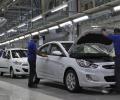
As the second wave of the Covid-19 pandemic abates, India's automakers are hopeful of a quick recovery in sales volumes, led by better rural sentiment, low interest rates, improved availability of finance and a gradual uptick in business and economic activity. In fact, companies have started to ramp up production already, encouraged by high order books and the growing preference for private transport in both rural and urban areas as a means to avoid infections. In early April, the industry had been bullish as the sales trend for March showed that the effects of the Covid-19 pandemic had been left behind. The total vehicle sales had grown by 77 per cent, albeit on a lower base, and for the past few months, sales had consistently touched 300,000 units per month.

State-owned Indian Oil, Bharat Petroleum and Hindustan Petroleum currently lose Rs 180 crore per day.

The company has raised the rates of its utility vehicles Sumo and Grande MK II by Rs 7,800-Rs 10,300.

The early results from corporate India for the first quarter of 2015-16 are in, and these strongly suggest that a cyclical recovery is underway.
The rising prices characterising the steel industry have been primarily due to hike in input costs besides increase in demand, a study has found out.

Ore and coking coal to come from Tata mines in Canada, Africa.
Ford Motor India would announce an across the board price hike next month, a top company official said on Wednesday.

The increase in prices by the country's largest steel producer is effective from April 1.
Predictions of below normal monsoon rains have poured cold water on the bullish growth plans of fast-moving consumer goods companies, which have continued to show robust growth of 17-18 per cent in the face of rising input costs and the economic downturn.
